How we made an 8-second AI comedy short with two consistent characters, start to finish - RefVid
Turn your own photos into videos in minutes · Your first video is free, no watermark
First video free, no cardGenerating confirms everyone pictured agreed. Terms
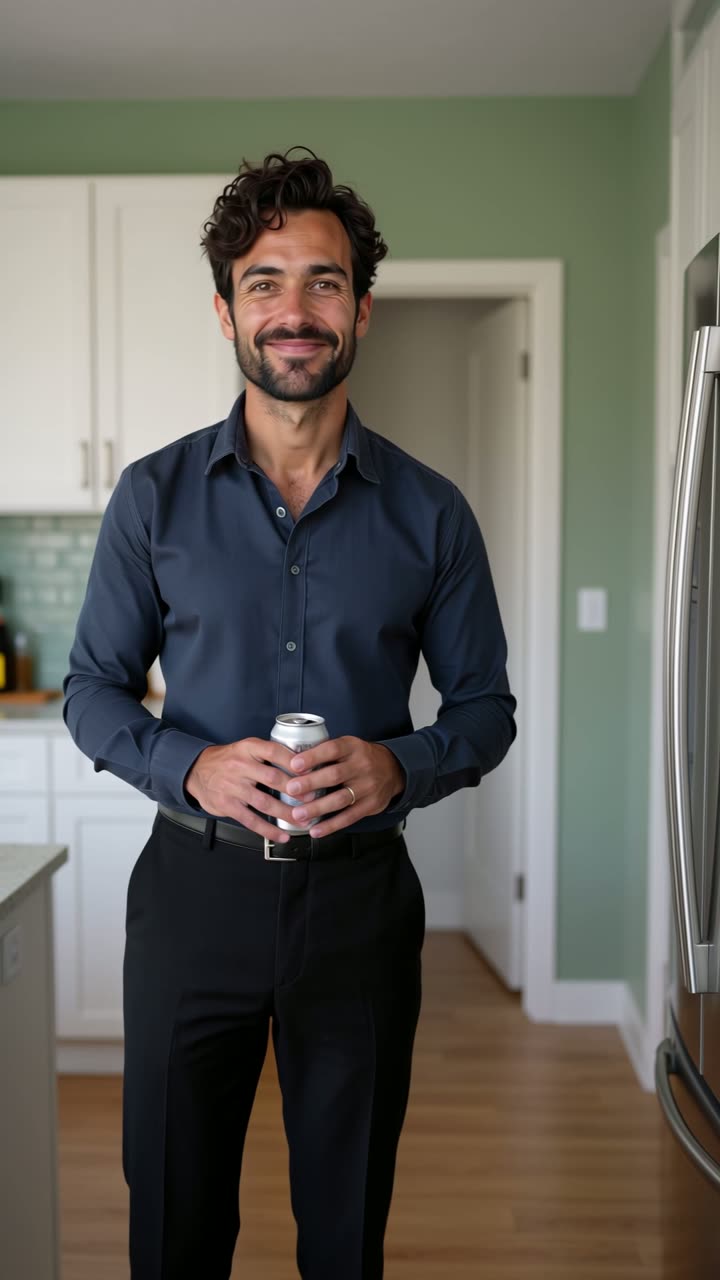
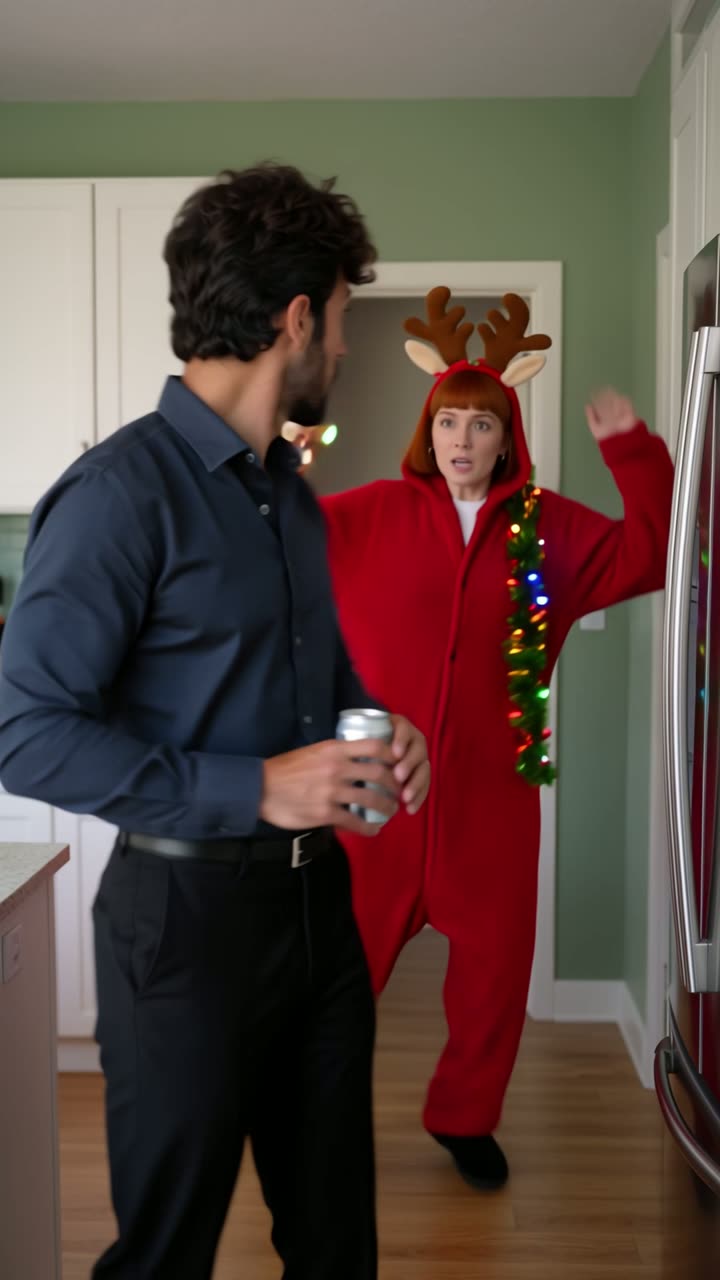
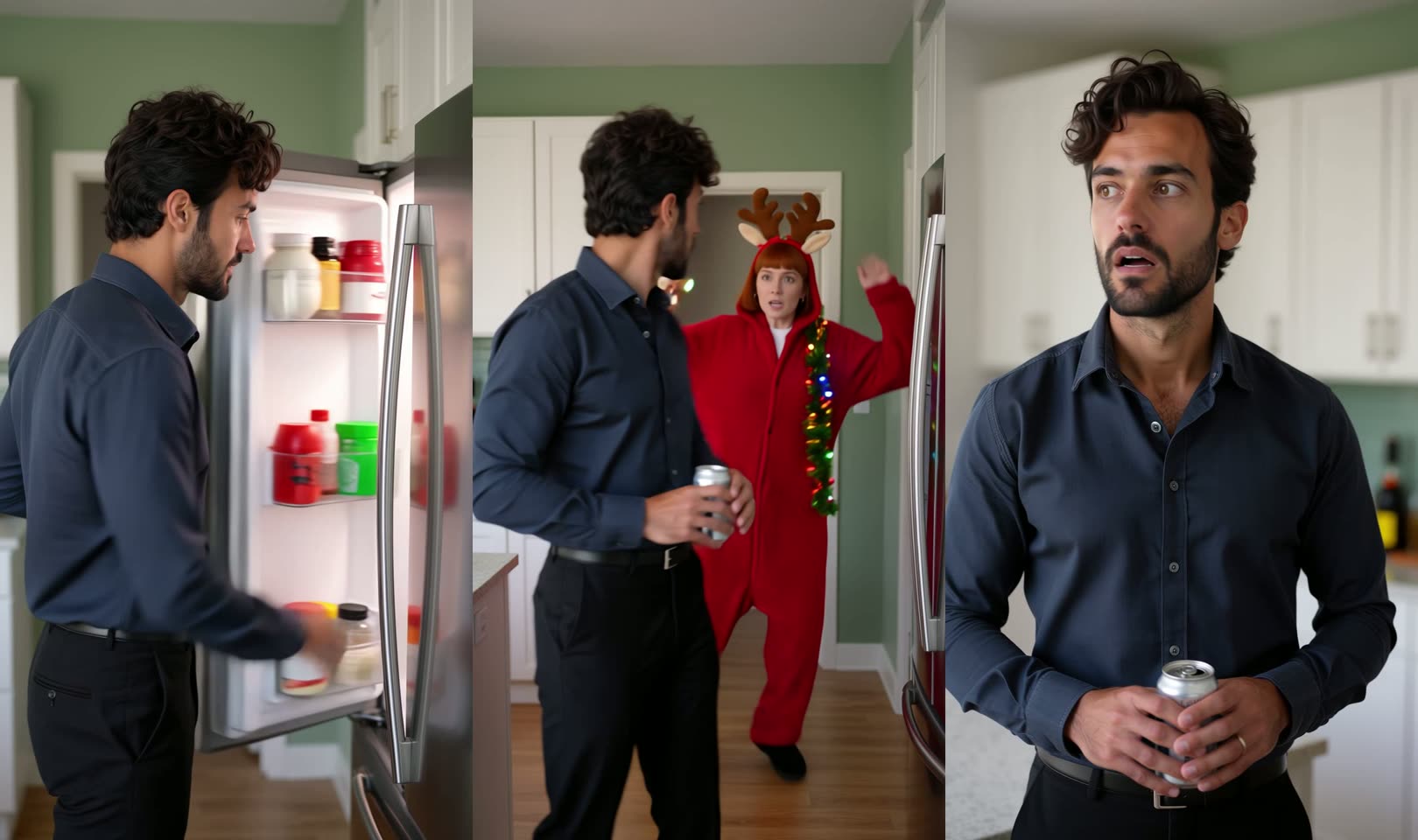
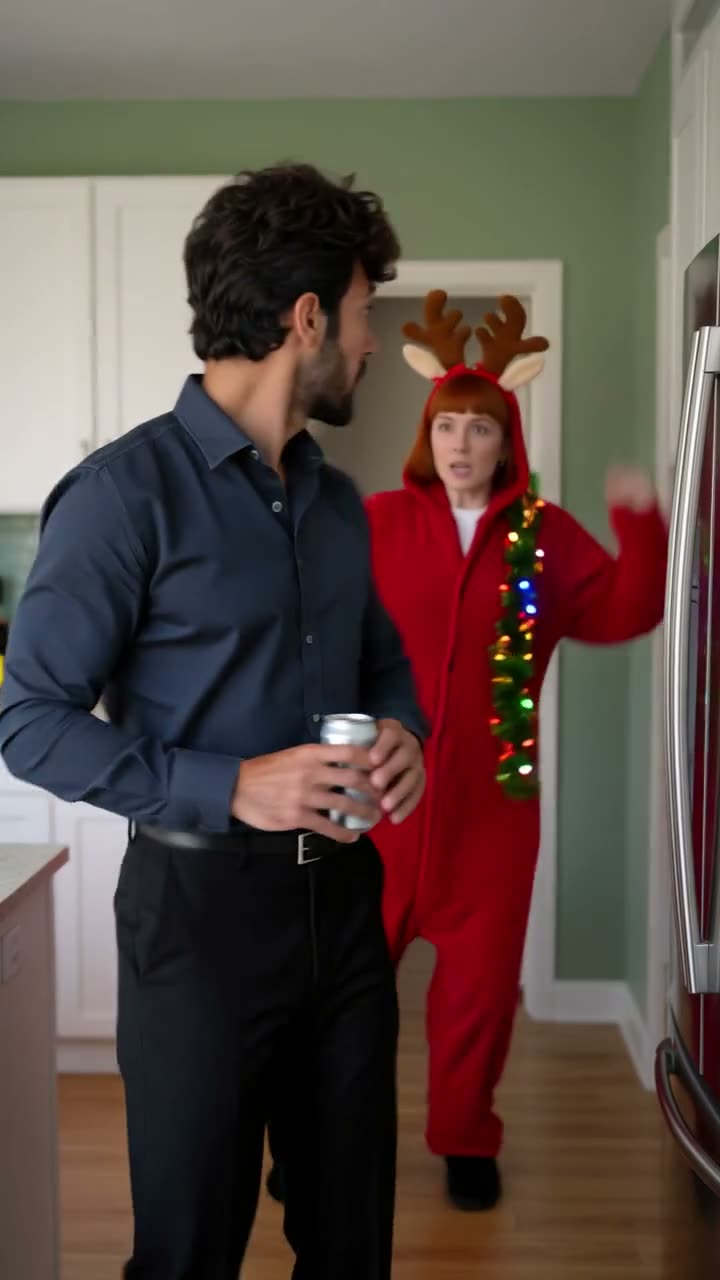
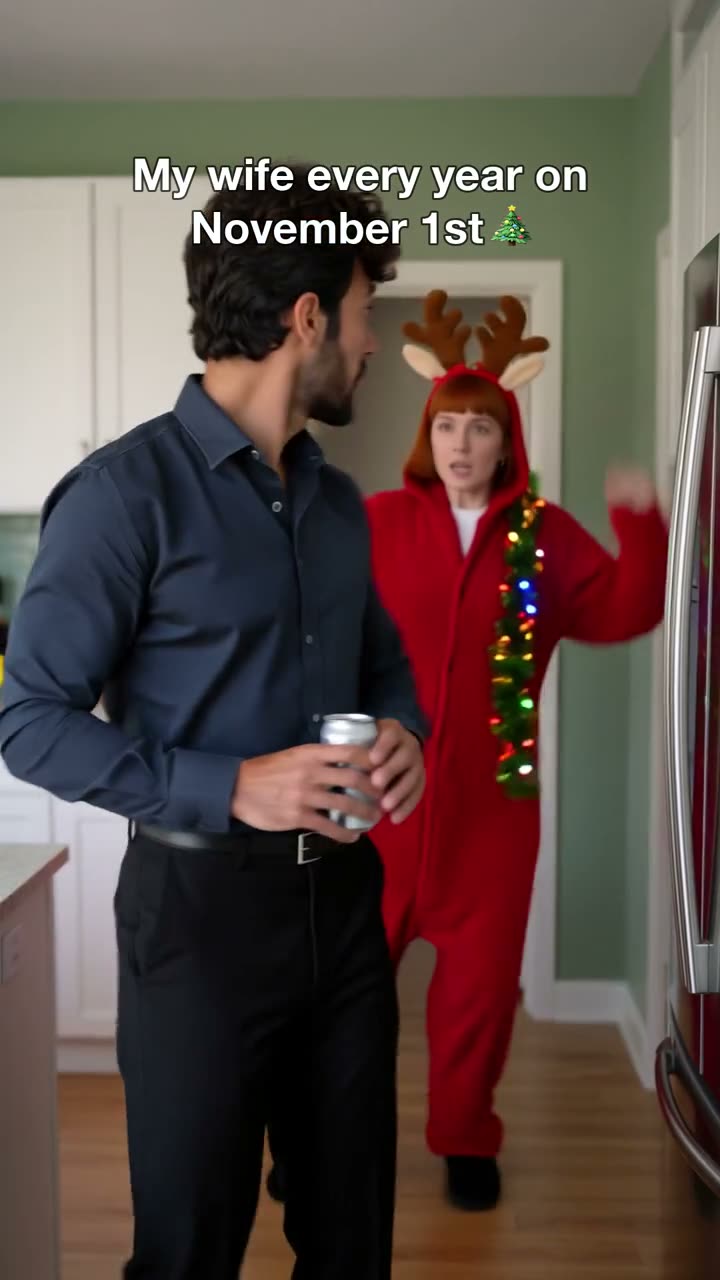
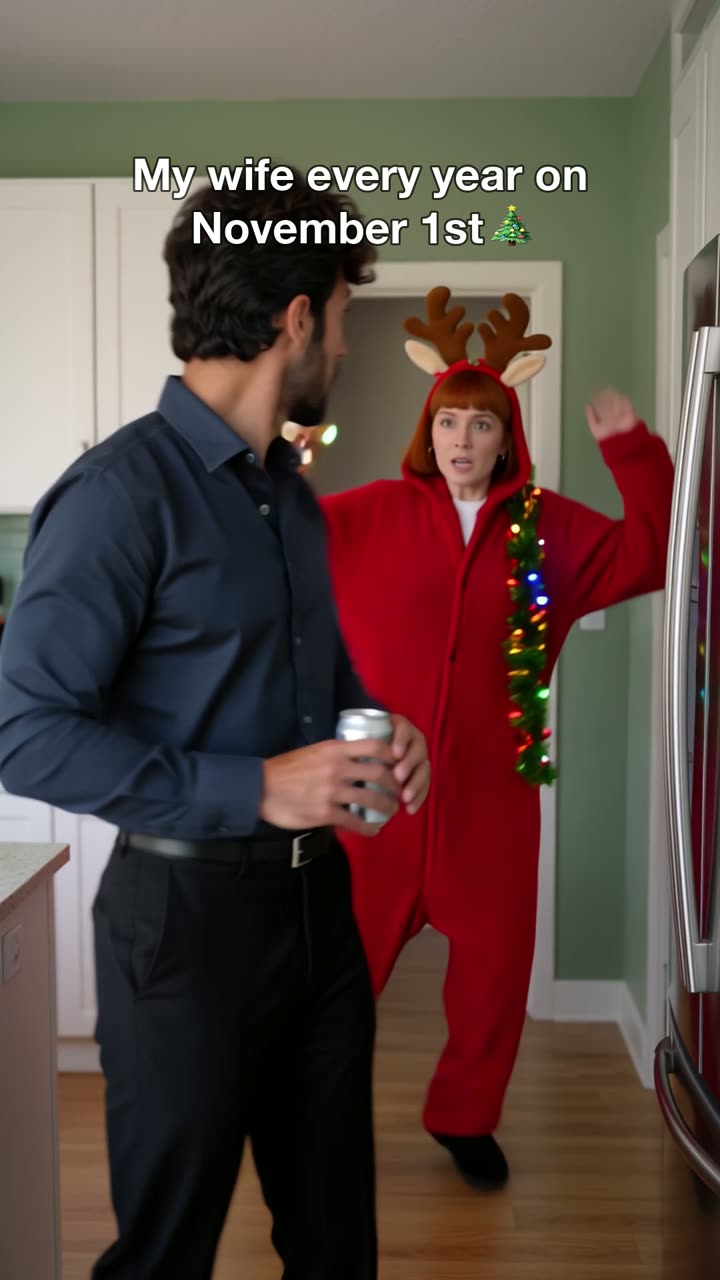
This is the complete making of our 8-second short "My wife every year on November 1st": a husband calmly grabs a drink while his wife, who starts Christmas on November 1st, is already decorating behind him. Our two recurring characters, Leo and Mia, play the couple, from four photos of each.
It took one Kling 4 generation, kept on the first take, and about an hour from idea to finished clip. Below is every step in order, each with a picture from our own files, and the exact prompts.
How to make AI comedy videos: start with a one-line gag
The idea in one line: a husband calmly grabs a drink from the fridge while, behind him, his wife runs past already decorating for Christmas, because for her the season starts on November 1st.
It came from our morning look at what was rising that week, where two couples had posted this gag on 1 November; we wanted our own characters to play it.
One line is the test. If the joke can't be said in a sentence, it won't survive 8 seconds of video. This one also has what makes a short easy to generate: one room, nobody speaks, two people and a clear punchline at the end.
Choosing the characters: how to make funny AI videos from photos
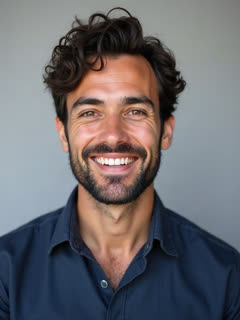
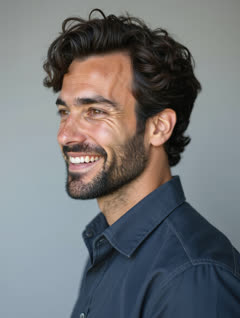
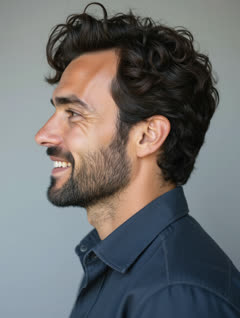
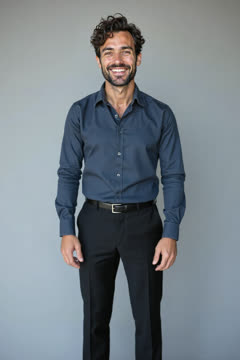
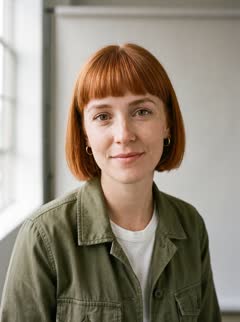
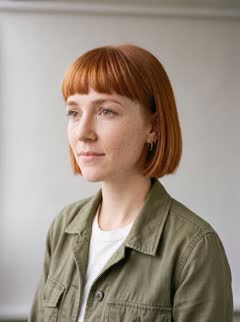
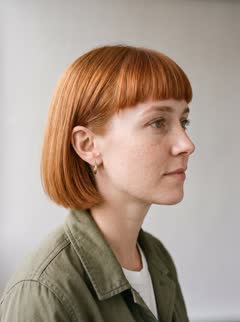
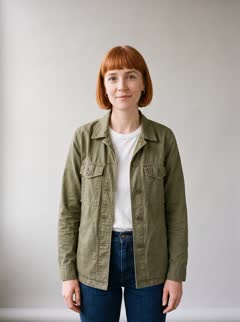
The roles were already cast. Leo and Mia are the two people we keep saved in the RefVid studio, four photos each, and they play a couple well.
The same faces matter twice. Inside the clip, the person who opens the fridge in shot 1 has to be the man who stares in shot 3, or the joke breaks at the cut. Across clips, recurring characters are what people recognise: the next short with Leo and Mia starts from the same photos, not from a new random face.
We changed nothing in the photos. Mia's reference photos show her in a jacket, so the script had to name her costume clearly enough to win against them; the review step below is where that was caught.
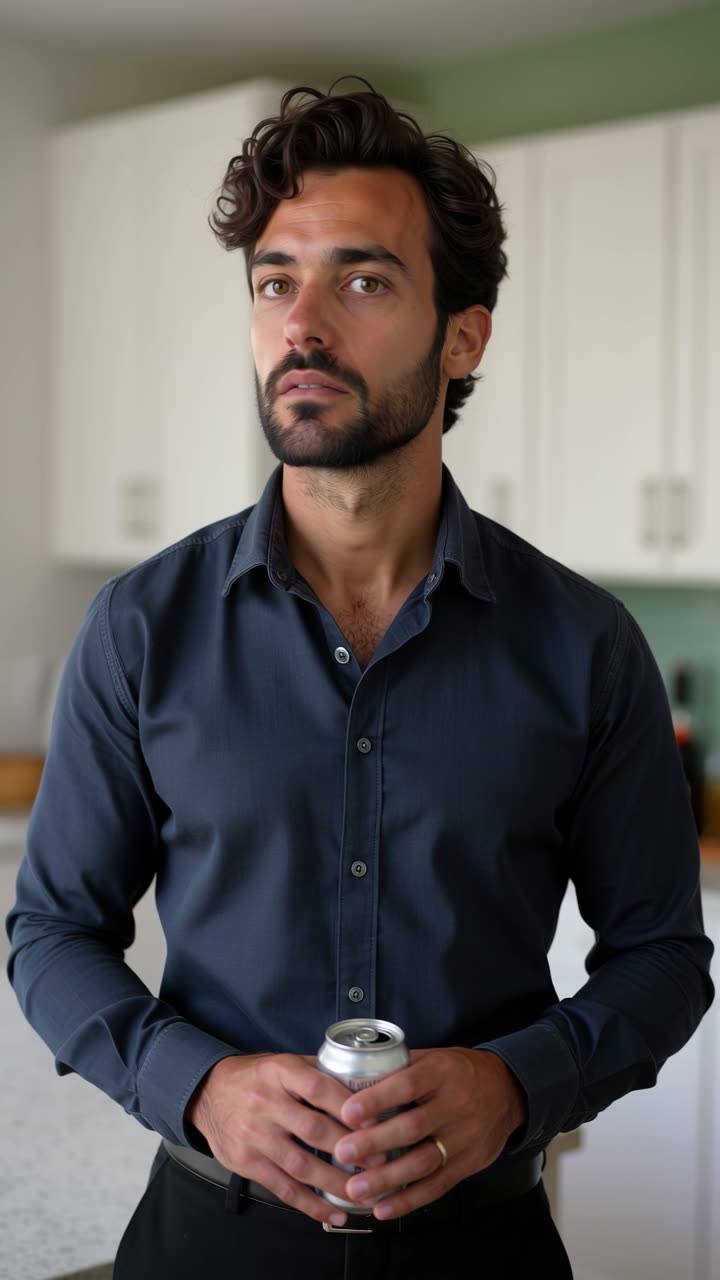
Leo
Mia
Writing the script: beats, camera, set, wardrobe and timing
We wrote a full script before any prompt. First the beats, read from the original frame by frame: he opens the fridge, turns to the camera with a can, she runs past behind him at about 4 seconds, he stares after her to the end.
Then each shot gets its camera, set, light, wardrobe and action. Camera: a phone at chest height on a tripod, never moving. Set: a bright modern kitchen in daylight, white cabinets, sage-green walls, a steel fridge at the right edge, bare counters. Wardrobe: Leo in his navy shirt; Mia in a red fleece onesie from neck to ankles, an antler headband and a garland on one shoulder, dragging lit Christmas lights.
Timing: three shots of 2, 3 and 3 seconds, a hard cut between them, and something moving inside the first second. We wanted it a little faster than the one-take original, so the fridge beat is short and her run lands at 3 seconds instead of 4.
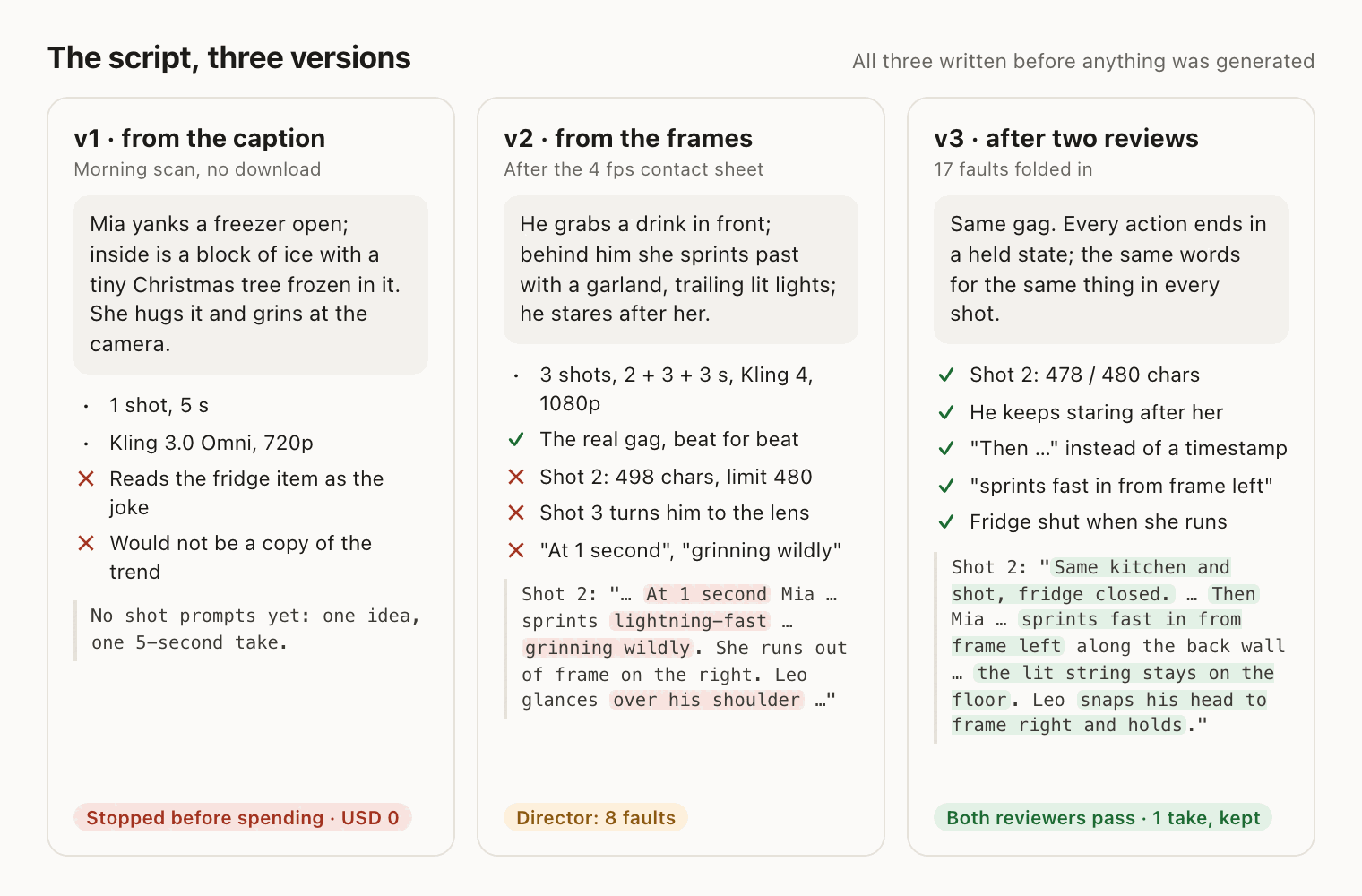
The script went through three versions. v1 was guessed from the caption, a freezer with a Christmas tree frozen in a block of ice, and read the wrong thing as the joke; we stopped before spending anything. v2 had the real gag from the frames. v3 is v2 after two reviews.
| Shot | Camera | What happens |
|---|---|---|
| 1 · 0–2 s | Medium, chest height, fixed | Leo, side-on at the fridge, yanks the door open and holds it |
| 2 · 2–5 s | The same spot and lens, a jump cut in time | Fridge closed, Leo faces the camera with a can; Mia sprints past behind him, the lights stay on the floor; he snaps his head after her |
| 3 · 5–8 s | Medium close-up, fixed | Leo keeps staring after her, mouth slightly open, and blinks once |
Two script reviews before we spent a credit
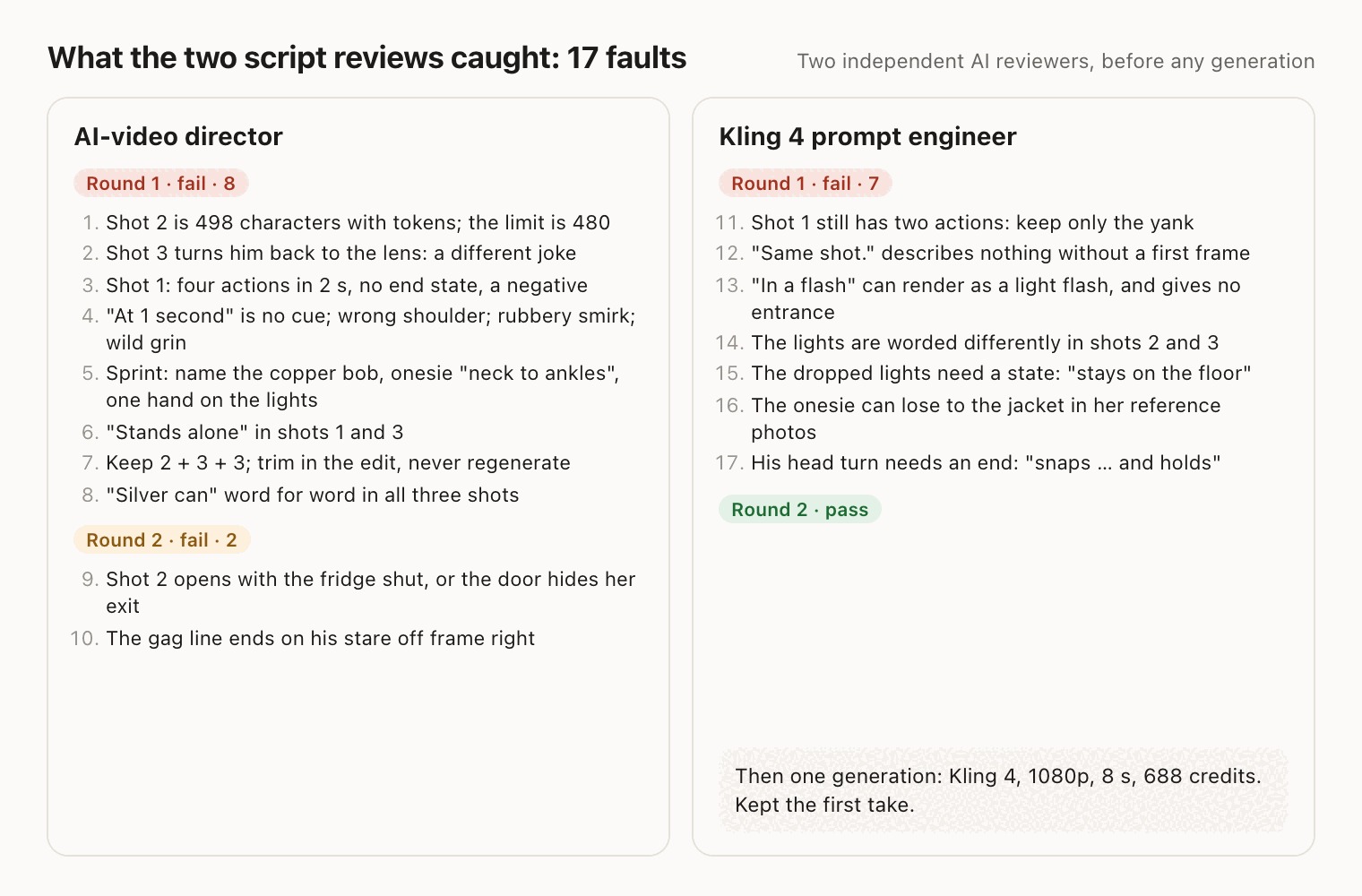
Before generating, two separate AI sessions reviewed the script, each seeing only the script and the frames. An AI-video director asked whether the clip tells the joke: 8 faults, then 2, then clear. A Kling 4 prompt engineer asked whether the model will draw what the words say: 7 faults, then clear.
The fixes that mattered most are below. The other post about this clip lists the rest.
| Before | After | Why |
|---|---|---|
| Shot 2: 498 characters | 478 | RefVid takes up to 480 characters per shot in a several-shot Kling clip |
| Shot 3: Leo turns back to the lens | He keeps staring after her | Looking at the lens is a different joke |
| "At 1 second Mia sprints…" | "Then Mia … sprints…" | A timestamp inside a shot is not a reliable cue |
| "sprints … in a flash" | "sprints fast in from frame left along the back wall" | "Flash" can be drawn as light, and it gave her no entrance |
| "red fleece onesie" | "red fleece onesie neck to ankles" | Her photos wear a jacket; a loose wardrobe line loses to them |
From script to shot prompts: the Kling prompt examples we used
Each shot of the script became one prompt: the camera first, then the place, then who is there and what they wear, then the action in order, ending in a state the model can hold. There was no first frame, so shot 1 also describes the whole kitchen. Leo and Mia are named; the studio turns the names into their saved photos.
Shot 1, 2 s:
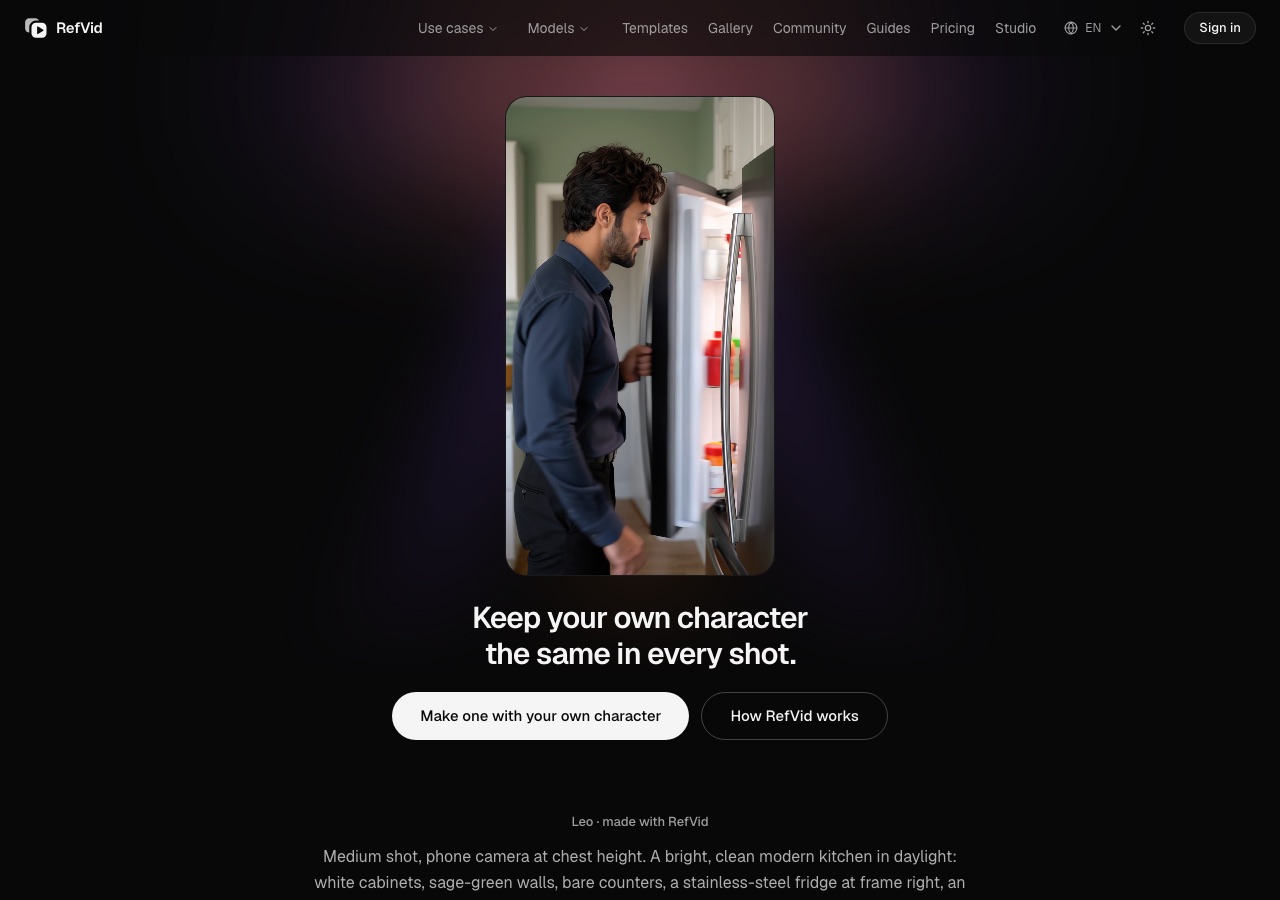
"Medium shot, phone camera at chest height. A bright, clean modern kitchen in daylight: white cabinets, sage-green walls, bare counters, a stainless-steel fridge at frame right, an empty open doorway in the back wall. Leo, in his navy shirt, stands alone, side-on, hand on the fridge handle. Right away, in one quick pull, he yanks the fridge door wide open, cold light spilling out, and holds it open, staring into the fridge. Fixed camera."
Shot 2, 3 s:
"Same kitchen and shot, fridge closed. Leo, left of center, faces the camera, silver can at his chest, closed-mouth smirk. Then Mia, her reference face and copper bob, in a red fleece onesie neck to ankles, antler headband, garland on one shoulder, sprints fast in from frame left along the back wall, dragging glowing multicolor Christmas lights, out of frame right; the lit string stays on the floor. Leo snaps his head to frame right and holds. Fixed camera."
Shot 3, 3 s:
"Medium close-up from the waist up, the same kitchen behind Leo, who stands alone. Behind him one string of glowing multicolor Christmas lights lies in a long line across the floor. Leo keeps his body toward the camera and his head and eyes turned to frame right, staring blankly, mouth slightly open, silver can at his chest, completely still. He blinks once, slowly, and keeps staring. Fixed camera."
Three habits carry over to any clip: the same words for the same thing in every shot ("silver can", "glowing multicolor Christmas lights"), the speed written on the verb ("sprints fast"), and "Fixed camera." at the end of every shot. Swap in your own names to reuse them.
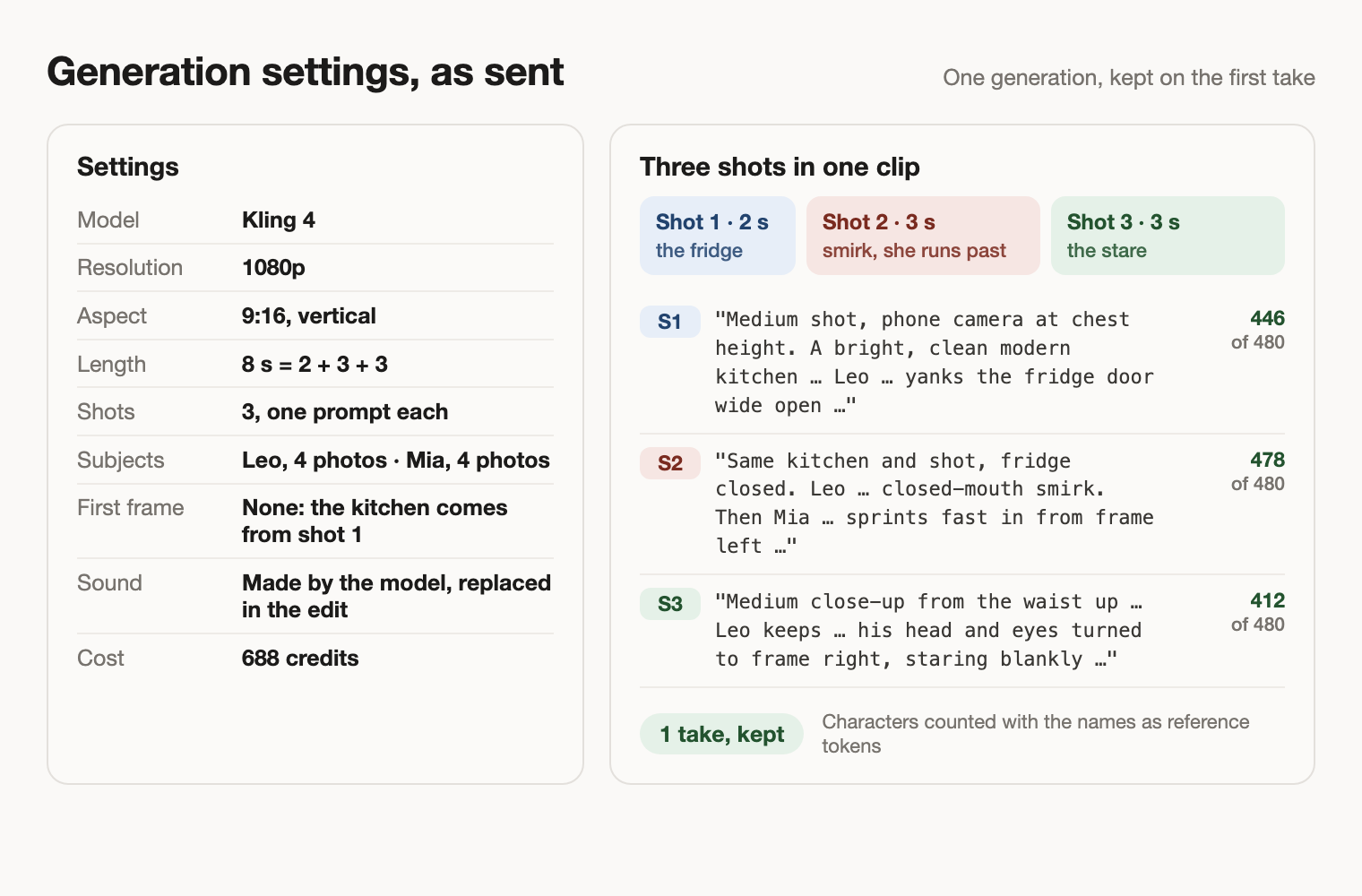
Generation settings: Kling 4, 1080p, 9:16, 8 seconds, one take
In the studio we opened Leo, added Mia as a second subject, and put the three prompts into three shot boxes of 2, 3 and 3 seconds. Model Kling 4, 1080p, 9:16, 8 seconds in all. No first frame and no last frame.
The shot prompts were 446, 478 and 412 characters, counted with the names turned into reference tokens; a several-shot Kling 4 clip in RefVid takes up to 480 per shot.
It cost 688 credits: 8 seconds of Kling 4 at 1080p, which always comes with sound. We generated once. On RefVid a single video starts at $2.99, credit packs at $9.90 and plans at $10 a month, and credits never expire.
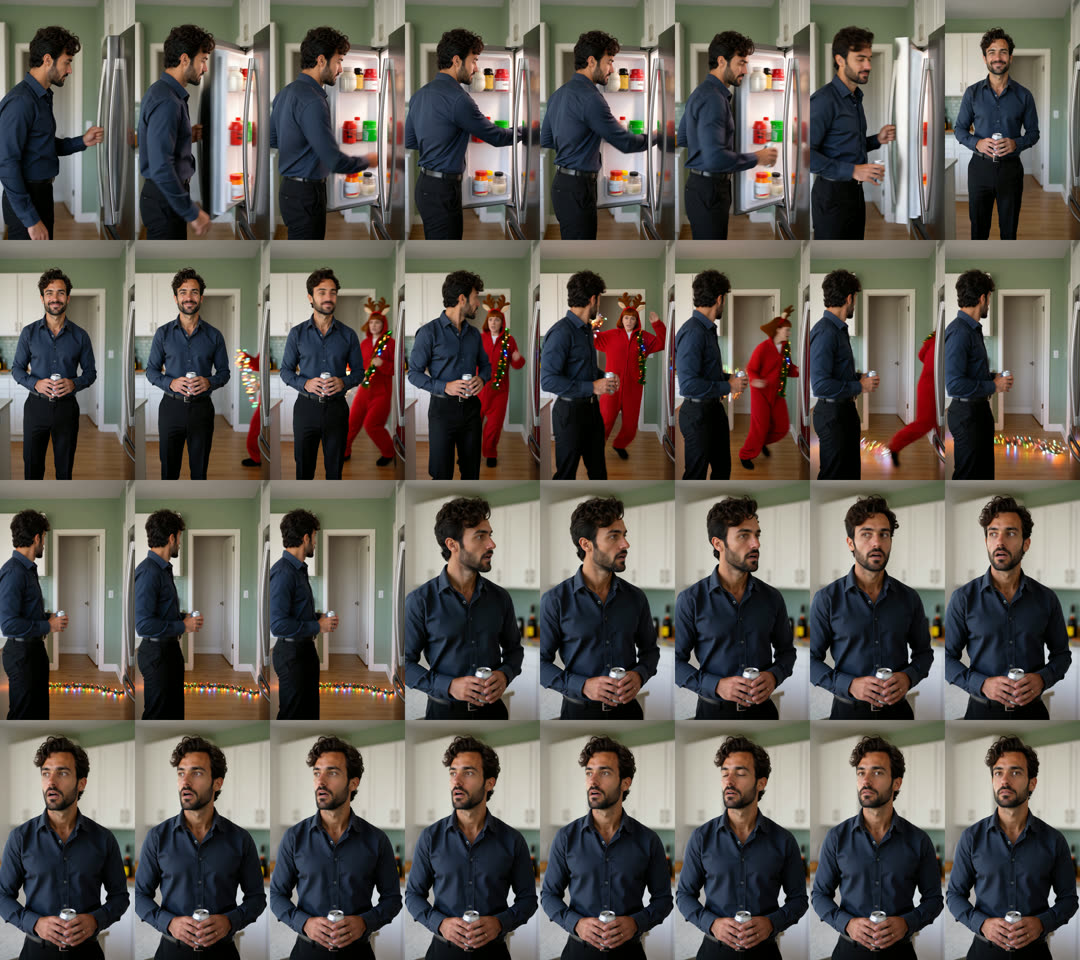
The frame-by-frame check: what came out differently, and why we kept it
We read the take at 4 frames a second, 32 frames for 8 seconds, and looked at the run more closely. The model cut where we asked, at 1.8 and 4.8 seconds. Both faces matched their photos in every shot, and no extra people appeared.
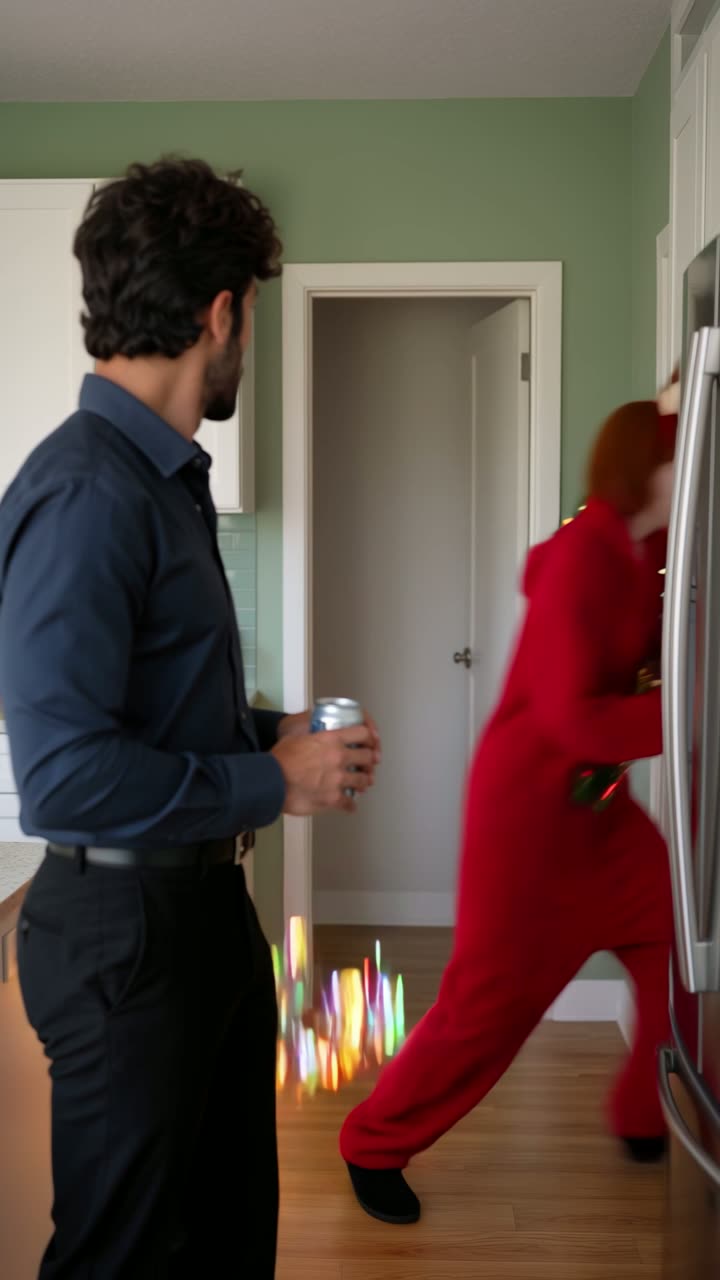
Four things differ from the prompts. Mia came in from the right, not the left, stopped to wave and ran back out on the same side. Leo's closed-mouth smirk came out as an open smile. In the last shot he starts staring after her, then slowly turns toward the lens and blinks at 7.3 s.
The test for keeping a take is the one-line joke: calm husband in front, Christmas already happening behind him, a stunned stare. All of it was there, so we kept the first take. A retake would have cost another 688 credits for the same joke.
The edit: trim, caption and sound
Trim: none. The stare at the end held for the full 3 seconds, so the clip runs the whole 8 seconds as generated.
Caption: "My wife every year on November 1st 🎄" in white bold with a thin dark outline, two lines near the top, inside the area the phone apps keep clear, from the first frame to the last. It goes on in the edit, never in the prompt, where the model would draw it as garbled letters.
Sound: Kling 4 always makes its own audio, and we took it out. The version on this page and on YouTube has our own arrangement of Jingle Bells, a public-domain tune. On Instagram and X it carries the original clip's own sound, the way people who know the gag remember it; on TikTok, a Christmas song from the platform's licensed sound library.
Sharing it, and the result
The finished clip was ready at 08:15 UTC on 3 November, about an hour after that morning's look at what was rising. Between 08:26 and 08:42 it went out on YouTube Shorts, Instagram Reels, X and TikTok, each with the same line as its post text.
Every RefVid clip also has its own share page, with the clip and the three prompts that made it, so anyone can see how it was made and start from it. That is where the posts link.
Try it yourself
- Save three or four photos of each person once as a subject: yourself, a friend, a character you made. Write your gag in one line, then as two or three shots, with the names in the prompts, and generate.
- The short drama template starts you from a two-person scene in three shots, already laid out; change the names, the place and the action to your own joke. Your first 5-second video is free.
Start from a template
Each one opens the studio with the shots, shape and length already set. Add your own product and generate.
More character videos

Frequently asked questions
How long did it take to make the short?
About an hour from the idea to the finished clip: reading the original's frames, writing and reviewing the script, one generation of a few minutes, the frame check and the edit. The script and the two reviews took most of it.
How much did the clip cost?
688 credits for one 8-second Kling 4 clip at 1080p, and we needed only one take. A single video on RefVid starts at $2.99, credit packs at $9.90 and plans at $10 a month.
Can I make the same kind of short with my own face?
Yes. Save three or four photos of yourself, and of anyone else in the clip, once as subjects, write the shots with your names in them, and generate. The faces come from your photos in every shot, as Leo's and Mia's did here.
How long can a Kling 4 shot prompt be?
In the RefVid studio, a clip with several shots takes up to 480 characters per shot, counted after the subjects' names become reference tokens. Ours were 446, 478 and 412. A single-shot clip can be much longer.
Why keep a take that didn't follow the prompt exactly?
A video model takes a prompt as direction, not a script. Here Mia came in from the other side and Leo turned to the lens at the end, but the joke still landed, so a retake would have cost credits for nothing. Change one thing and retake only when the joke fails.